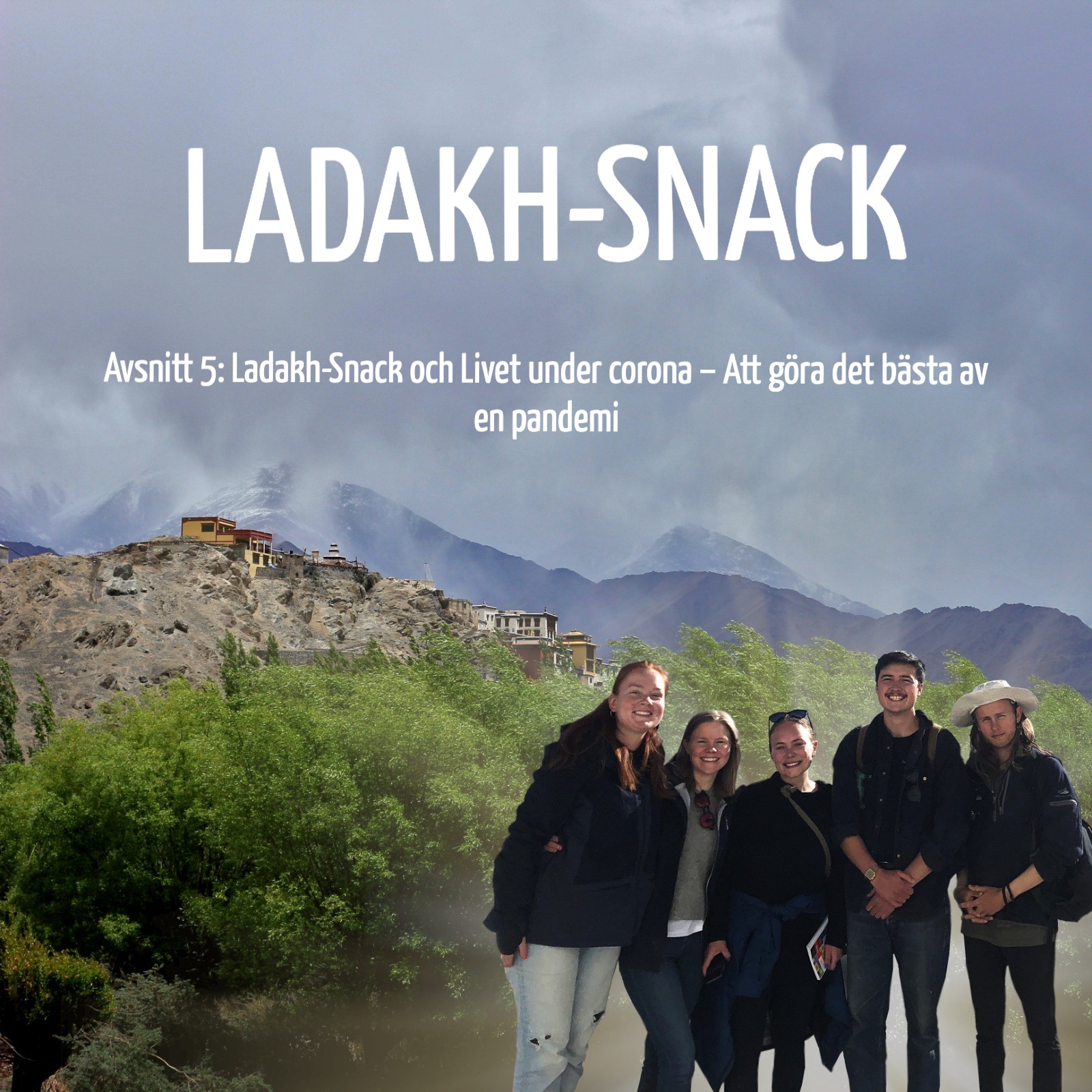
Då var det dags för femte avsnittet av Ladakh-Snack, som vi spelade in den 22 juli utspridda på olika orter i Sverige. Podcasten finns bl.a. på Acast och Spotify.
Bara att gilla läget
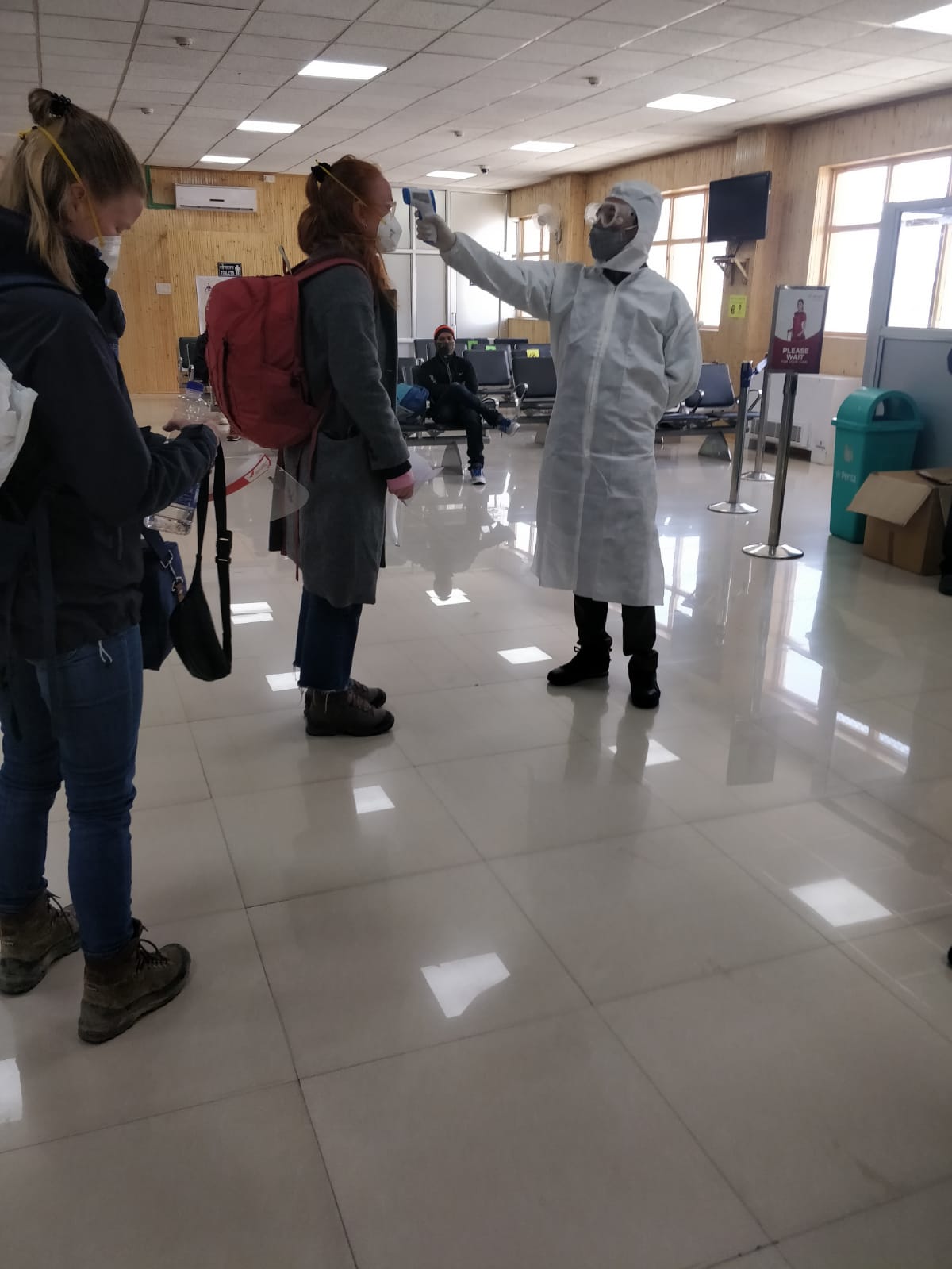
Medan livet förflöt i mångt och mycket som vanligt hemma i Sverige hamnade vi efter en dryg månads vistelse i Ladakh i en närmast total lockdown. Efter att ett nationellt utegångsförbud testats under en dag annonserades några dagar senare, med fyra timmars förvarning, att Indien skulle gå in i lockdown i tre veckor.
Utegångsförbudet kom sedan att förnyas vid flera tillfällen. Under lång tid gick det inte överhuvudtaget att lämna Ladakh då flygtrafiken var nerstängd och vägarna, som normalt sett endast är öppna under sommarhalvåret, hölls stängda långt in på våren. Den officiella informationen lämnade ofta gott om tolkningsutrymme, och som utomstående kan en ställas inför knepiga etiska resonemang kring att tolka direktiven till sin egen fördel.
När gatorna töms tar djuren över ännu mer än vanligt
Även när de nationella restriktionerna lättades höll sig byarna stängda för besökare. Ladakhierna är dock vana vid att vara isolerade och är, på både ett personligt och strukturellt plan, på många sätt oerhört väl anpassade att hantera en lockdown under lång tid. Ladakhs ekonomi präglas av en stark kontrast mellan den turistdominerade ekonomin i huvudstaden Leh och den lantliga bystrukturen där familjejordbruk och självförsörjande fortfarande dominerar. Den kontrasten präglar även regionens reaktion på Covid-19. Medan turismen utplånades fullständigt hade byarna för första gången på länge inte ont om folk. De allra flesta som bor i Leh har fortfarande starka familjekopplingar till minst en specifik by, och när landet stängdes ner åkte många till sina hembyar och deltog i jordbruket. Behovet av att ha distansundervisning är kanske den mest problematiska effekten av nerstängningen i Ladakh, eftersom tillgången till internet inte är universell.
Vad en än tycker om Indiens respons på covid-19 var den utan tvekan mer dramatisk än hemma i Sverige
Kontrasten till Indien i övrigt är dessutom kraftig. Konsekvenserna av utegångsförbudet för migrantarbetare har med rätta fått en del medial uppmärksamhet. Bristen på förvarning innebar att många fastnade i tätbefolkade urbana områden utan vare sig försörjningsmöjligheter eller möjlighet att ta sig hem till sina familjer, och behandlades i många fall brutalt av polisen. Islamofobiska konspirationsteorier har dessutom eldats på. Indiens strategi väcker frågor om betydelsen av både ett helhetsperspektiv och intersektionalitet när vi jämför olika länders respons på pandemin.
Det finns även en del spekulationer kring hur coronavirusutbrottet samspelat med den uppblossade gränskonflikten mellan Indien och Kina som utspelat sig på flera platser i Ladakh.
Kontrasten till Sverige är givetvis uppenbar på många sätt. I avsnittet diskuterar vi även hur våra erfarenheter i Ladakh skiljer sig från våra vänners upplevelse av pandemin, hur den präglat vår syn på Sveriges och svenskarnas svar på pandemin och vad som går och inte går att överföra mellan två så vitt skilda sammanhang.
Tack för visat intresse och tveka inte att höra av er med frågor och kommentarer.
The following is an analysis of how the coronavirus pandemic lays bare the complex web of crises facing modern society, originally written in a shorter version for the Future Earth newsletter. While brutally short given the topic, it can seem rather long and dense for a blog post like this. I make no apologies for this. I am trying to illustrate a systemic way of thinking about our predicament, whether your attention span is up to it or not. Complex systems are emergent; they are irreducible to the sum or the operation of their individual parts. It’s therefore in their nature that looking at one part independently of its relationship to the whole will yield not just simplified, but directly false and delusional conclusions. The evidence of that is all around us.
Female farmers taking a lunch break from weeding in Takmachik ecovillage. Photograph courtesy of my friend Tsering Dolkar, who like many in Ladakh has returned to her home village during the pandemic.
I am a young person from a highly “developed”, industrialized country, born into extraordinary privilege. Along with my friends and peers, however, I am inheriting a world on the brink of ecological ruin. I consider some kind of civilizational collapse to be likely, and the widespread faith in technological salvation to be delusional and irresponsible. I now find myself in a “developing” country for the first time during the coronavirus pandemic, an event that raises fundamental questions about the direction of industrial society; where people live, how they produce food, how they conduct exchange, and how they relate to the natural world. From this vantage point, based on a systemic understanding of the unfolding crisis, I argue that my generation of activists and policymakers back home has a lot to learn from communities and grassroots organizations in the global South.
In the Ladakh region of northern India, where I’m currently volunteering, adaptation to the new reality has been relatively straightforward. With the onset of lockdown, much of the urban population has joined their families in the rural villages. Community bonds and local food production remain strong enough to sustain the population quite easily even when there is no work in the city (although local food is complemented by government-subsidized rations for things like fresh vegetables and eggs). The temporary de-urbanization may well linger beyond the physical presence of the virus, especially if the number of tourists visiting Ladakh falls as a result of reduced disposable income and economic uncertainty.
There are plenty of recent examples of economic crises being accompanied by a re-population of the countryside, and in some cases even de-industrialization. In Cuba after the fall of the Soviet Union, an interesting and remarkably successful transformation took place. The country was financially dependent on sugar exports to the Soviet bloc and relied on Russian oil to power its industrial agriculture. When the Soviet Union collapsed and Cuba lost this critical trading partnership, draft animals had to take the place of tractors and other farm machines, synthetic fertilizer was replaced with organic methods and large farms were broken up into small ones often working together in cooperatives.
The example shows a reversal of a near-universal trend in modern society, which can be described as a replacement of local ecological (and human) complexity with global industrial complexity and local homogeneity. When agriculture expands towards large-scale monoculture production, the diversity of functions performed by soils, plants, animals and humans is supplanted by synthetic inputs, machines and (mostly fossil) energy. This causes the agricultural system to grow in complexity, becoming increasingly interlocked with other sectors and dependent on large-scale flows of throughput. Flows of energy and materials for equipment, transport and inputs (e.g. natural gas and phosphorus as fertilizer feedstock); flows of credit necessary to sustain increasing capital investments, and access to big markets to justify and repay them (agricultural products are often traded on global commodity markets). And with a growing distance between producers and consumers comes a greater need for transport, processing and storage. The feedback between the farm and the state of the natural world is broken, and agriculture becomes the embodiment of an industrial metabolism in which finance makes up the arteries and fossil fuels the bloodstream. The energy required to power all of these components and link them together makes industrial agriculture a vast energy sink, expending many times more energy upstream than it places on the dinner table. In many cases it runs an energy deficit at the farm level alone, not even considering the supply chain.
While it is cost-efficient in a context where people’s time is expensive relative to energy (one barrel of oil is equivalent to several years of human labor), the replacement of local ecological complexity with energy-guzzling global industrial complexity is a risky proposition in a much more disruptive, energy-constrained, and local future. Agriculture becomes entwined in long supply chains made up of large, interdependent systems through which a shock that takes out one part can easily ripple through the rest. Village-scale farmers in Ladakh can more or less carry on as normal while their larger colleagues in the rest of India must now worry not only about the lack of mobile migrant labor, but also about the domino effects the current recession will have on the cost of capital on the financial market and investment in future oil supply.
The same basic pattern outlined above can also describe the evolution of industrial society at a larger scale, modern cities being the most extreme expression of this. The complex global, energy-guzzling metabolism of the emerging human “superorganism” has enabled the concentration in densely populated urban areas of ever more layers of complexity on top of each other; more goods, services and occupations, more demand for food, energy and materials, more infrastructure to circulate it all. The accumulation of financial surplus lets cities grow longer tentacles to expand their ecological footprint, laying claim on (and laying waste to) larger and larger chunks of biocapacity around the world. When a crisis ripples through the economy, there is a shedding of excess layers of complexity. Choking supply chains render some occupations physically unsustainable. A lack of credit, the unravelling of financial wealth, and a loss of disposable income pulls the economic rug out from underneath others. (Tourism is a prime example of a clearly vulnerable industry). As the global supply chains of industrial capitalism choke and splutter, those financial tentacles suddenly grasp thin air for many urban residents(starting with the most vulnerable), stranded in an ecological desert. The radical separation between people and the means of subsistence is exposed as a source of fundamental vulnerability, and the relentless push towards cities is revealed to be contingent on the relentlessly circulating metabolism of the global human “superorganism”. As such, it will be reversed – in much the same way as the agricultural system of Cuba had to be – when the ecological Ponzi scheme of industrial capitalism breaks down for good and nature once again dictates the economics and settlement patterns of human societies.
A formidable convergence of crises already places the global economy in an extremely vulnerable state. Most obviously, it is driving hard into a web of ecological limits; climate breakdown, mass extinction, costly energy extraction, topsoil loss, collapse of marine ecosystems and water scarcity are testament to that, and are increasingly being felt economically. These physical sources of risk are multiplied by a bloated financial system kept afloat by anunsustainable belief today inunsustainable growth tomorrow. Economic growth has been sustained globally by a vast expansion of private and public debt in relation to GDP; this has occurred over several decades but gone into overdrive since the 2008 financial crisis. We see it when central banks buy enormous amounts of debt issued by governments to keep the economy and the financial sector afloat. That keeps interest rates artificially low and asset values artificially high while further inflating the public and private debt bubble. This strategy is highly depletable and will not be as effective in the future. Claims on future growth, resources and wealth cannot be expanded indefinitely; certainly not in a crisis-ridden economy running into ecological limits. And the risk of financial collapse is in turn compounded by uncertainty about the future. If there is a lasting loss of faith in the global economy and financial system, the outcome would be a lasting reduction in spending, investment and credit issuance by individuals, companies, banks and governments. Continuous growth is the impossible self-fulfilling prophecy of capitalism. And by its nature, if capitalism doesn’t grow, it crashes.
Some of these underlying vulnerabilities are evident in the recent convulsions of the oil industry. As lockdowns caused Chinese oil demand to collapse, Saudi Arabia tried to get Russia on board to cut production to keep prices from falling. Russia, however, saw an opportunity to undercut the US oil industry and kept the taps open. This had the intended effect, pushing prices towards rock bottom and sending struggling American oil producers sliding towards bankruptcy. Russia’s strategy worked because oil production in the US is dominated by fracking, a complicated and costly process relying on high oil prices to be profitable. American oil producers have relied on cheap post-recession credit to go into massive debt since the start of the fracking boom about a decade ago. The enormous current over-supply is even turning oil prices below zero in places but risks translating to under-supply as investment in future supply is cut, sending prices spiking once again. Such violent fluctuations are to be expected from a system smashing its head against the wall of its own unsustainability.
The factors outlined above act as multipliers on each other and are fundamental enough to bring down civilization, several of them single-handedly. But the example underlines the fact that they become sources of political instability and economic volatility way before they have the chance to do so. Impending collapse can consequently be hard to discern in the midst of a crisis since the ramp-up of underlying vulnerabilities (e.g. oil extraction costs) are triggered by external shocks (e.g. epidemic-induced economic shutdowns) as well as obscured by short-term fluctuations (e.g. geopolitics and market dynamics) and temporary fixes (e.g. bailouts and debt expansion). The need for resilience thinking, which deals with the fundamental vulnerabilities and not just the one-off trigger, has never been clearer.
The writer and activist Shaun Chamberlain captures the essence of the concept in an intuitive way. Resilience is not, he says, about “predicting the future the best we can and then adapting to that”. Instead, it’s about choosing “the course of action which makes sense across the widest possible range of possible futures”. Much of mainstream sustainability discourse implicitly assumes that the fundamental trajectories of industrial civilization (mechanization, globalization, urbanization, monetization) will continue, and as a result gets stuck in detailed technological scenarios. In contrast, Chamberlain’s understanding of resilience calls us to broaden and simplify our thinking instead of trying so hard to envision “sustainable” ways to keep doing what we want, paying heed to the underlying vulnerabilities of global industrial capitalism and the disastrous consequences should those scenarios fail to keep its wheels turning. With this in mind, how can we embed our thinking in a world where collapse is not even the worst-case scenario?
Modern agroecological approaches like permaculture seek to learn from and mimic natural systems, acknowledging that with far lower access to cheap energy and external inputs, farming systems will have to depend on their immediate surroundings and use existing relationships between soil, plants and animals to perform the diverse functions necessary to sustain agriculture (like pest control, nitrogen fixation, soil nutrient cycling) instead of replacing them by artificial means (through synthetic pesticides and fertilizer). In other words, global industrial complexity must be replaced again by local ecological complexity.
In the same way, a society with fewer external sources of food, energy, materials and finance – a society with a leaner metabolism – will have to exchange much more of its energy and material throughput with its immediate surroundings. It will have to produce a diversity of food and provide for a range of other energy, material and social needs locally. Human labor will have to replace machines and energy again. Personal relationships between people will have to underpin the exchange of goods, services and labor and provide economic safety nets. In place of specialization and reliance on global industrial complexity, social and economic complexity will have to be maintained at a local level.
We may then look to societies and cultures that are still shaped by such conditions and have retained characteristics that evolved when coexisting with the local environment was a matter of survival. Ladakhi society, for example, has a rich heritage of practices formalizing cooperation and sharing in harvesting, livestock keeping, water distribution, use of water mills, maintenance of infrastructure, support networks among groups of families, to name a few. Differences in climate, ecology, culture and other factors will yield different means of adaptation, but (just like in permaculture) underlying patterns and structures can be applied in different contexts. What are the means of exchange, and the rates of exchange between different goods and services? How is surplus controlled? What is traded outside the community? How are obligations repaid, and how are they viewed culturally? How is labor divided between activities? How are common resources governed? How are ecological limits respected? How are behaviors enforced? What are the sources of status and respect? In a future where global markets implode, national governments fail, and local communities must shoulder the burden of their failed states, these questions can offer insights for the design of institutions that rebuild cooperation, reciprocity, trust and diversity in the global North where social capital has been hollowed out.
This may sit uncomfortably with modern fetishes of progress and “green” technology. But our specialized, sophisticated manipulation of nature and our quest for control, productivity, efficiency and growth have an emergent effect; they are adding up to an assault of life on earth, the result of millions of actions taken (by ignorance or necessity) in defiance of a basic fact that is coming back to haunt us: we are embedded in and inseparable from nature and ultimately have to play by its rules. In the name of progress, our actions have created a “human superorganism” that we don’t really understand, let alone control.
It would be arrogant and irresponsible for the global North not to look to cultures in the global South that have sustained themselves for vastly longer than it has taken industrial capitalism to annihilate much of the living world. Technological, financial, and institutional innovation can still be applied, but within much the much tighter material and social constraints of a smaller, simpler, more local society. For example, modern initiatives such as local currencies, time banks, food cooperatives, interest-free community banks, and income-sharing communities can be said to mimic (intentionally or not) economic structures and relationships existing that are embedded in the informal economy of such cultures.
The underlying question to explore can be framed as how societies sustain and retain complexity at a local level, with limited resources and within ecological limits. When localities and communities are homogenized as complexity is globalized – as the current crisis shows – they lose the capacity to meet most of their needs independently of the global system, the power to control their lives, and their relationship to the place they inhabit. It turns human society into a superorganism that rips through the fabric of the natural world in pursuit of its own growth. Rather than awaiting technological salvation and worshipping hope, we should draw inspiration for a resilient way of organizing society and relating to the natural world from flesh and blood communities that already provide food, energy, materials, safety, culture and community within the means of the planet.
Med tre veckor i bagaget drygt tre kilometer upp i Himalaya i Leh, Ladakh, Indien, tänkte jag sammanfatta de inledande intrycken. Jag har ärligt talat inte mycket att berätta om mitt arbete på Ladakh Environment and Health Organisation än. Men förväntningar, farhågor, hopp och förtvivlan har konstant studsat mellan mig och min nya omgivning. Så jag tänkte bjuda på en inblick i en privilegierad, trädkramande västerlännings trevande försök att börja förstå en plats som är radikalt annorlunda, men ändå inte helt.
På sistone har det som ett tag känts uppenbart på ett abstrakt plan börjat sjunka in: troligtvis har jag klimatets, ekosystemens och den så kallade civilisationens gemensamma kollaps att se fram emot under min livstid. Visst lär min tidsmässiga och geografiska tur bespara mig det värsta, men för nån med en droppe samvete spelar det mindre roll. Då insikten retfullt långsamt sipprat ner till det känslomässiga planet har min oro strömlinjeformats, mitt intresse för detaljer bleknat, och ett ord med växande kraft ekat i huvudet: Resiliens. Hur säkrar vi mat, vatten, mark, energi, hälsa, trygghet och sammanhang när den ekologiska skuldbubblan spricker och lämnar efter sig en enklare, mindre, lokalare ekonomi (på de platser där vi alls kan bo och odla)? Hur behåller vi kylskåp, internet och modern sjukvård men lösgör våra livsuppehållande system från det globala korthuset av pengar, olja, plast, teknik, prylar, överflöd och självbedrägeri så att det inte begraver rubbet? En förenklad och stiliserad berättelse, men jag känner mig rätt trygg i att den är bäst lämpad att vägleda mina och samhällets val i den framtid som väntar. Typ att 1,5-gradersmålet lär vara rökt när jag fyller 30, massutrotningen rullar på, och tillväxten fortsätter krossa planeten (även om en stoppar in solkskensscenarier i modeller).
Och som blåögd (i dubbel bemärkelse) 22-årig wannabe-hipster har jag nu kommit hit från Sverige i prickig ylletröja och färgglad yllemössa med ett naivt men oundvikligt mellanting mellan förhoppning och förväntning att få bevittna återstoden av ett enklare samhälle präglat av samarbete och sammanhållning, försörjt av ett balanserat jordbruk anpassat efter den lokala ekologin. Där pengarnas logik inte dominerar. Att få åka ut i byar och uppleva strukturer, värderingar, försörjningssätt som på riktigt är ”recessionssäkra” (en användbar version av resiliensbegreppet som jag lånat av en god vän). Sörja över det som håller på att förloras, samla lärdomar och kraft att kämpa vidare. Nu är det förvisso svinkallt, det händer lite och det växer inget; än så länge får jag mest grubbla vidare bakom en datorskärm i Indien, istället för bakom samma datorskärm i Sverige. Men jag börjar iaktta, ställa frågor och orientera mig.
Med upphetsning får jag höra om de institutionaliserade samarbetsformer som finns kvar i byarna, som Rares – där bybor turas om att ta varandras boskap upp i bergen på sommaren – och Faspoon – grupper av omkring fem familjer som hjälper varandra med allt mellan himmel och jord. Om hur den som ägde byns vattenkvarn brukade få arbete i utbyte mot att mala bybornas korn, hur familjerna turades om att hjälpa varandra med skörden. Och ofta gör det fortfarande. Sånt bygger in ekonomiskt svängrum i människors försörjning, istället för att den hänger och dinglar från marknadens spända gummiband. Resiliens! Men såklart är dessa praktiker utrotningshotade.
Militären skojar du inte med
En bräcklig, ensidig ekonomi, geografisk isolering och ett kargt klimat sätter Ladakh i ett utsatt läge. Ett stenkast härifrån kontoret ligger en av flera massiva militärbaser i området. Tillsammans rymmer de fler människor än Leh. Och på väg in till centrala marknaden passerar jag en hel drös tomma hotell som står och väntar på sommaren. Där har ni de överlägset största inkomstkällorna och arbetsgivarna: militären och turismen. Och så blir jag bokstavligen varenda lunch serverad vitt ris på indiska statens bekostnad. Lokalt odlade grödor som bovete och korn har inte en chans att konkurrera. Tanken är att alla ska ha mat så det räcker, men det blir ju knäppt när det lokala jordbruket slås ut. Samtidigt som det i allmänhet är dyrt att importera mat, särskilt på vintern när vägarna till Ladakh är stängda. Drivor av näringsfattigt influget ris, en krigsapparat och medelklassens Instagramkonton känns sådär att vara alltför beroende av.
Boskapen har länge minskat i antal. Här uppmuntras bybor åter integrera korna – och deras avföring – i jordbruket
Den ekologiska balansen är delikat och lättrubbad här. Landskapet (det fysiska, kulturella och ekonomiska) har förändrats snabbt sen dörrarna till Ladakh plötsligt sparkades upp på vid gavel i mitten av 1970-talet. Befolkningen har växt medan jordbruksmark övergivits och boskap försvunnit då det är ont om folk i byarna att ta hand om den. Arbete, maskiner, konstgödsel, kemiska bekämpningsmedel, frön och foder är idag betydande kostnader för bönderna. Och även om de flesta ännu har starka rötter i landsbygden säger alla att den är hotad.
Jordbruket har mäkta svårt att konkurrera om ungas framtider. Mer fokus på lönsammare grödor (och lite mindre på traditionella stapelfödan korn) skulle hjälpa. Det börjar till exempel odlas svamp och vattenmeloner på somrarna. Det finns också potential att bättre kapitalisera på efterfrågan för ekologiska produkter genom bättre marknadsföring och mer förädling (typ aprikossylt också, inte bara aprikoser). Och en större marknad för lokalt odlad mat här i Leh skulle inte vara fel. Vid sidan av vägen där jag tar bussen in mot stan sitter ett tiotal äldre kvinnor och säljer potatis, morötter, kålhuvuden, lök om en har tur. Ett tiotal till sitter vid centrala marknaden. Och så finns en rad med stånd i närheten där ett tiotal äldre män säljer torkade aprikoser och aprikoskärnor. Men i affärerna är det idel plastförpackningar med importerade varor som gäller.
Nedanför de mäktiga bergen syns ett vintrigt jordbrukslandskap, tro det eller ej, men allt mer odlingsbar mark får stå obrukad
Självklart är det grymt om lantliga försörjningssätt kan stå sig bättre ekonomiskt och locka fler unga. Men det krävs försiktighet och systemtänkande. En jakt på ökade intäkter som en del av en självförstärkande spiral av skuldsättning, mekanisering, konkurrens och kommersialisering skulle bidra till att urholka byarnas livskraft, mångfald och gemenskap. Och jag tycker mig se en risk för en uppdelning mellan producenter och konsumenter. När de flesta har (direkt eller indirekt) tillgång till mark och försörjer sig delvis genom direkt, informellt utbyte och band av ömsesidigt beroende, behövs det inte nödvändigtvis en massa jättebilligt ris för att alla ska bli mätta. Folk är inte helt utlämnade åt matpriser åt ena eller andra hållet. Resiliens! Men om utvecklingen fortsätter bort därifrån kan vi hamna i en situation där lokal ekologisk mat blir lite av en nischmarknad där priserna drivs upp av en liten grupp konsumenter. Och där många inte kan klara sig utan det billiga riset.
När jag lyfter mina farhågor påminns jag om att jordbruket ligger så illa till att de flesta tyvärr redan är beroende av det subventionerade riset, att de flesta ändå odlar flera olika grödor, att terrängen inte lämpar sig för storskaligt jordbruk, att marknaden för ekologiskt och lokalt är väldigt liten. Hur som helst finns det win-win-lösningar. Som handelskooperativ för ekologiska produkter, eller självhjälpsgrupper som skapar och säljer lokalt hantverk tillsammans, som sparar och återinvesterar gemensamt. Och olika typer av ”appropriate technology”: artificiella glaciärer, solvärmda växthus, jordkällare, komposttoaletter, bättre torkutrustning för aprikoser. Enkel, billig, småskalig och lättillgänglig teknik som minskar löpande kostnader, ökar intäkter, stärker lokala kretslopp. (Allt detta är saker som LEHO jobbar med, mer om det utlovas i ett senare skede.)
Frågan är om dessa lösningar kan hålla tillbaka stormen. De ökar lönsamheten och stärker den gemensamma välfärden, men på ett känsligt och försiktigt sätt. Syftet är att förändra lite för att bevara mycket. Men krafterna som sliter isär det resilienta jordbrukssamhället känns klart starkare än de som försöker hålla ihop det. Så länge de strukturella förutsättningarna ser ut som de gör lär utvecklingens järnstövlar fortsätta sin blinda framåtmarsch. Vi skulle väl behöva riva ner lite av det som står i vägen, inte bara bygga upp det vi vill ha mer av? ”Empowerment requires disempowerment”, som jag en gång hörde en vis person säga.
Politiskt går det åt helt fel håll. (Låter det bekant?) Ladakh lösgjordes förra året från delstaten Jammu & Kashmir och blev ett Union Territory. Det innebär att den administrativa makten flyttas från Srinagar i Kashmir hit till Leh (ett klipskt sätt för hindu-nationalistiska BJP att få majoritet i en region dominerad av buddister och muslimer). Men också att individer och företag utifrån nu får köpa mark och fastigheter, vilket kan leda till långt mycket värre än fler onödiga hotell med vattentoaletter vars innehåll inte har nånstans att ta vägen. Det talas om uran och andra mineralfyndigheter.
Alright, det var mitt fragmenterade försök att få en första helhetsbild. Näst på tur ska jag plötsligt skriva utkast till en slags handlingsplan för luftkvalitet i Leh som ska bli en del av en övergripande miljöpolicy för stan. Utan att på något sätt ha gjort mig förtjänt av det. Fortsättning följer.



 Även när de nationella restriktionerna lättades höll sig byarna stängda för besökare. Ladakhierna är dock vana vid att vara isolerade och är, på både ett personligt och strukturellt plan, på många sätt oerhört väl anpassade att hantera en lockdown under lång tid. Ladakhs ekonomi präglas av en stark kontrast mellan den turistdominerade ekonomin i huvudstaden Leh och den lantliga bystrukturen där familjejordbruk och självförsörjande fortfarande dominerar. Den kontrasten präglar även regionens reaktion på Covid-19. Medan turismen utplånades fullständigt hade byarna för första gången på länge inte ont om folk. De allra flesta som bor i Leh har fortfarande starka familjekopplingar till minst en specifik by, och när landet stängdes ner åkte många till sina hembyar och deltog i jordbruket. Behovet av att ha distansundervisning är kanske den mest problematiska effekten av nerstängningen i Ladakh, eftersom tillgången till internet inte är universell.