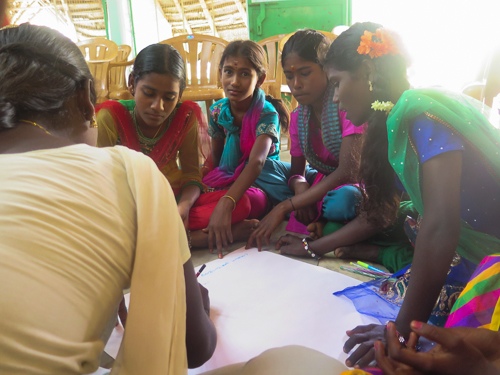
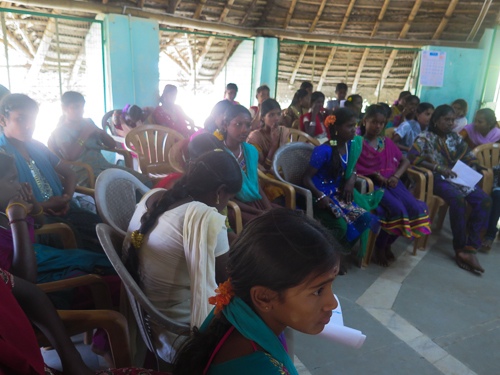
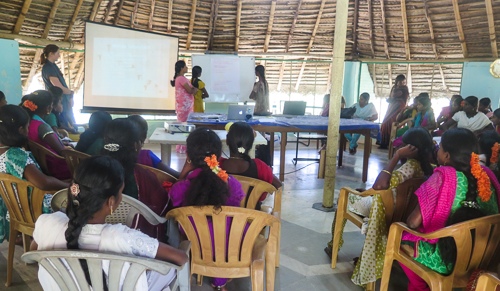
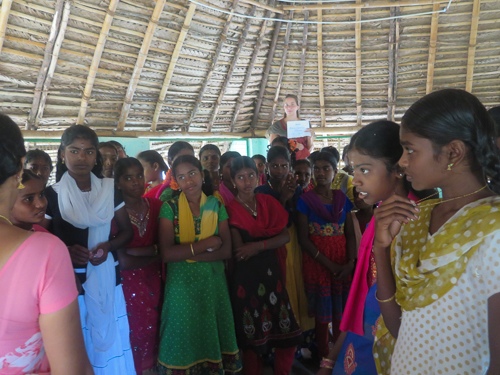
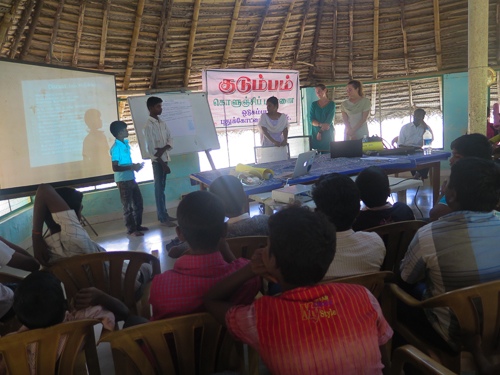
Kudumbam NGO is helping marginalized and small scale farmers in Southern India to cultivate organic and organize themselves to get stronger together. Currently Kudumbam and the farmers are working with a certification for organic products called PGS; Participatory Guarantee System. PGS is different from other organic certifications in the sense that the farmers work together in a self-regulatory system, where they form groups and inspect the organic cultivation of each other. Thus, they can guarantee that their agricultural products have been produced without any chemical pesticides or inorganic fertilizers.
Most traditional organic certifications involve a third-part consultant that from time to time inspect the farms, to guarantee that the agriculture is organic. The negative side of this, is that it is often very costly for the farmers to certify their products, since they have to pay for the consultancy. Hence, the organic farmers working with Kudumbam are now in the process of shifting from a third-part certification to the PGS certification. This way they can save money together, and sell their organically certified products. Kudumbam started working with PGS in 2015, and over 100 farmers are already certified.
Next step in the empowerment of the organic farmers is the creation of a Producer Company. The newly PGS certified farmers are in the process of starting their own company for marketing of their products like millets, pulses, traditional rice varieties, vegetables and fruits. At the moment a problem for many small scale farmers is that they get a low income since there are many middle-hands involved in the business. Typically a so-called middle man will buy the product directly from the farmers, and then sell it to a whole seller, that in his turn will sell the product to the retailers, i.e. shops where the consumers can buy the products at a much higher price than the farmer got. Kudumbam is therefore working to link the producers more directly to the consumers, and facilitating training for the PGS-farmers on how to register their own company is one part of this work.


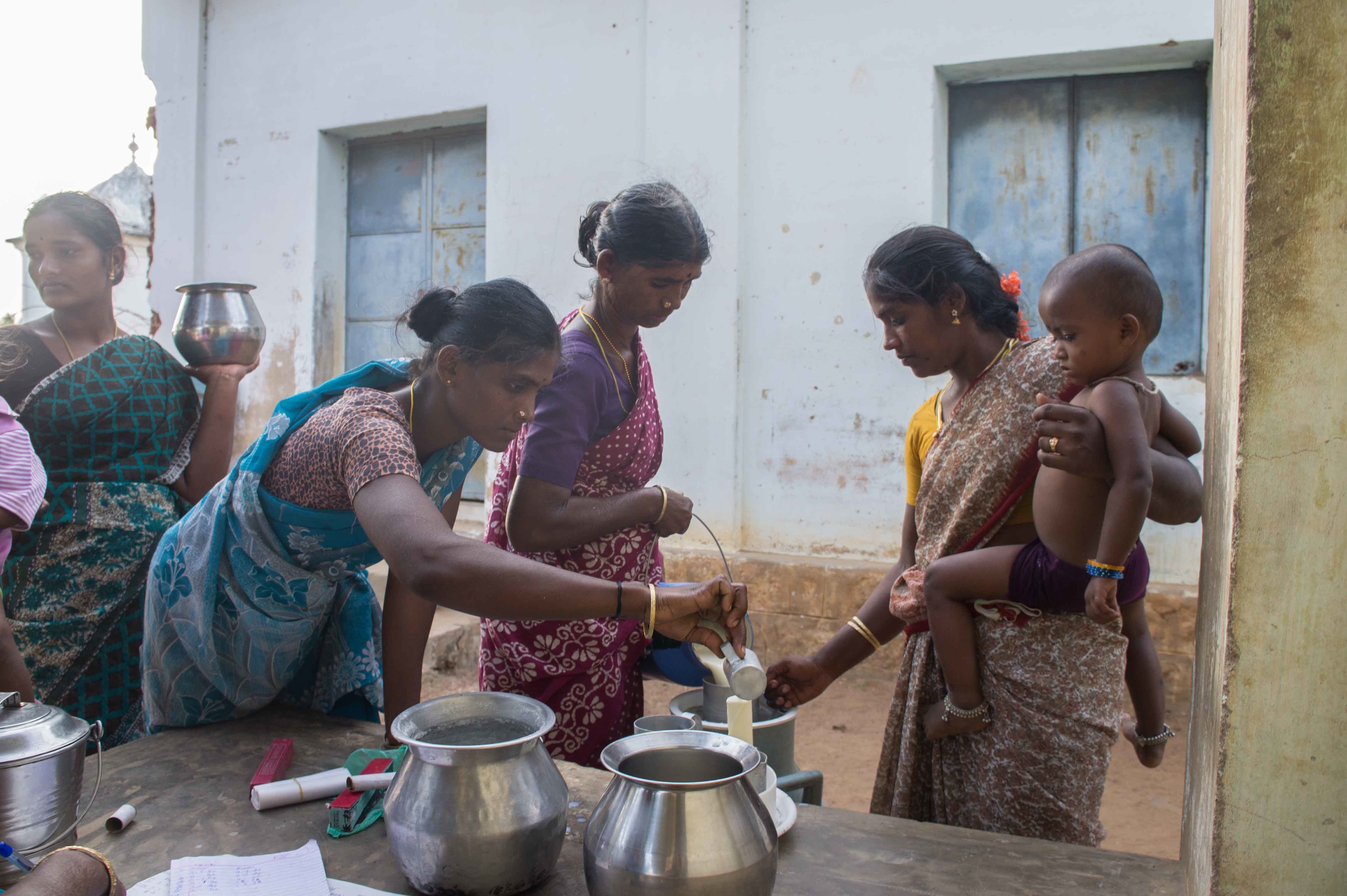
 mmal är sekreterare i en grupp av kvinnor som för ganska exakt ett år sedan startade ett mjölkkollektiv. Då var de bara fem, nu har gruppen femton medlemmar som tillsammans levererar runt 2200 liter mjölk per 15 dagar. Det var främst på grund av det låga priset de fick för sin mjölk som Parzhaniyammal tillsammans med fyra andra kvinnor bestämde sig för att starta projektet tillsammans Kudumbam. När de började var mjölkpriset på 15 rupees/l. Genom att gå ihop och sälja sin mjölk gemensamt har de lyckats förhandla upp priset från köparen till runt 25 rupees/l. Gruppen har bestämt att medlemmarna får 23 rupees/l. Skillnaden mellan priset från köparen och betalningen till gruppens medlemmar sätts in på ett gemensamt konto. De pengarna används dels till att betala lön till de som lägger ner tid på projektet men de kan också användas till att ge medlemmarna lån, eller delas ut som bonus. Hur de används bestäms av medlemmarna.
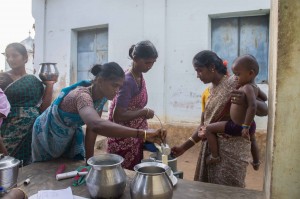 Mjölkkollektivet har förbättrat mycket för de här indiska mjölkbönderna, men de har fortfarande stora problem att tackla. Det största av dem är klimatförändringarna. Området har lidit av torka de senaste fyra åren. När jag träffar Pazhaniyammal har det inte fallit en droppe regn på över två månader. Kvinnorna i gruppen har ingen tillgång till bevattning och kan därför inte odla ris längre, en gröda som kräver mycket vatten. Istället tvingas de köpa dyr halm till foder. De odlar gräs och örter, men skördarna är låga.
 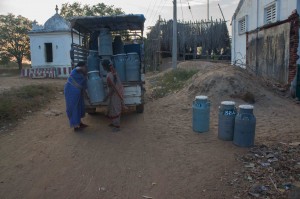 Om en månad börjar den indiska sommaren. Jag frågar kvinnan framför mig vad hon tänker om det. Pazhaniyammal ser bekymrad ut och berättar att hon kommer att få gå långt för att hitta vatten till korna. Vissa väljer att sälja sina djur när vattenbristen blir för stor. Hon säger också att det på grund av de här svårigheterna är extra viktigt att få tillräckligt betalt för mjölken.